ISRO Successfully Launches NVS-03 Satellite, Strengthening India's Indigenous NavIC Navigation System
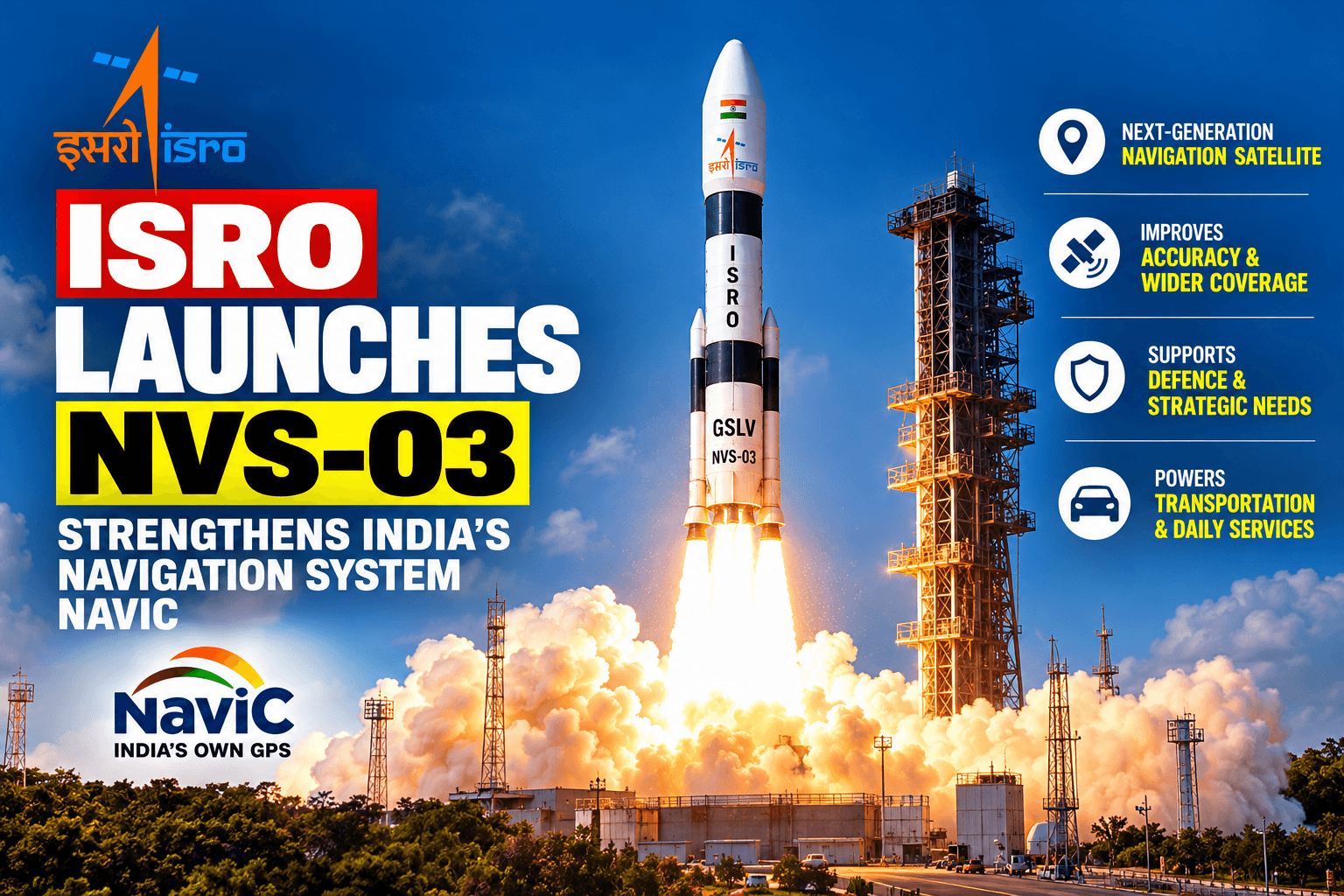
ISRO's GSLV-F18 rocket has successfully placed the next-generation NVS-03 navigation satellite into its designated transfer orbit, marking an important step towards strengthening India's independent satellite navigation capabilities.
The Indian Space Research Organisation (ISRO) successfully launched its GSLV-F18 rocket carrying the NVS-03 navigation satellite from the Satish Dhawan Space Centre in Sriharikota, Andhra Pradesh. The launch took place at 11:51 pm IST on October 30, 2026. The satellite was injected into its designated Geosynchronous Transfer Orbit (GTO), according to ISRO.
The mission marks the 20th flight of India's Geosynchronous Satellite Launch Vehicle (GSLV) and represents another development in the country's efforts to strengthen its indigenous Navigation with Indian Constellation (NavIC) system.
NVS-03: A New Generation Navigation Satellite
NVS-03 is the third satellite in ISRO's second-generation navigation satellite series. It is designed to improve the continuity and availability of navigation services provided through India's regional satellite navigation system.
The satellite weighs approximately 2,232 kg and carries an indigenously developed atomic clock alongside procured atomic clocks. Accurate atomic clocks are essential for satellite navigation because positioning calculations depend on precisely measuring the time taken for satellite signals to reach receivers on Earth.
One of the major features of NVS-03 is the addition of the L1 frequency signal alongside the existing L5 and S-band signals. This is expected to improve compatibility with a wider range of civilian navigation devices and expand potential applications.
What Is NavIC and Why Is It Important?
NavIC, or Navigation with Indian Constellation, is India's independent regional satellite navigation system developed by ISRO. It provides Positioning, Navigation and Timing (PNT) services across India and an area extending approximately 1,500 kilometres beyond the country's geographical boundaries.
Similar to the United States' GPS, NavIC is designed to support navigation and accurate timing services without relying entirely on foreign satellite navigation systems.
Its applications include civilian navigation and location-based services, real-time tracking of trains, vehicles and ships, defence and strategic operations, transportation and infrastructure management, and accurate timing services for critical systems.
Why the NVS-03 Mission Matters
NavIC has faced operational challenges in recent years because of satellite and atomic-clock failures. A July 2026 government reply in Parliament stated that only three satellites were providing positioning, navigation and timing services, while at least four operational satellites are required for basic standalone positioning services.
The successful injection of NVS-03 into its designated orbit is therefore an important step towards strengthening the constellation. However, the satellite must complete subsequent orbital manoeuvres and commissioning before its navigation services can be considered operational.