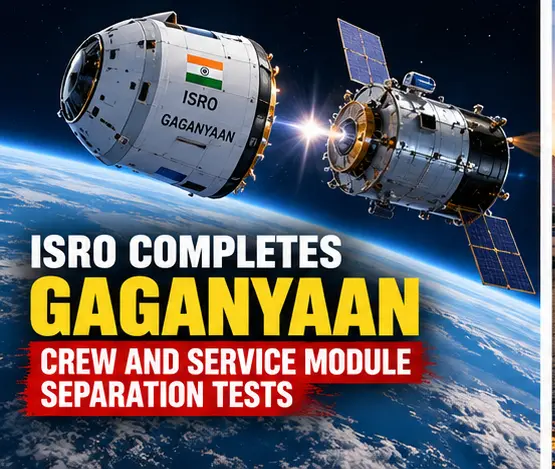
The Indian Space Research Organisation (ISRO) has completed a series of Crew Module–Service Module separation tests for the Gaganyaan human-spaceflight programme, an important step in preparations for the first uncrewed flight.
The crew module is designed to carry astronauts and return to Earth, while the service module supports the spacecraft during its orbital phase. The modules remain connected during launch and much of the mission before the crew module separates ahead of re-entry.
Why separation tests matter
ISRO said the test setup simulated module separation and the severing of electrical and fluid connections. The tests assessed the separation system and important crew-module subsystems, including avionics and navigation-related components.
A reliable separation sequence is essential because the crew module must detach at the correct time before re-entry. The test programme is intended to build confidence in the system's performance under mission conditions.
Next steps for Gaganyaan
ISRO has targeted the first uncrewed Gaganyaan mission for 2026. A target is not a confirmed launch date; readiness depends on the completion of remaining checks and preparations.
Gaganyaan aims to demonstrate India's ability to send a crewed spacecraft into low Earth orbit and return it safely. The programme includes testing launch systems, spacecraft hardware, crew safety and recovery operations.