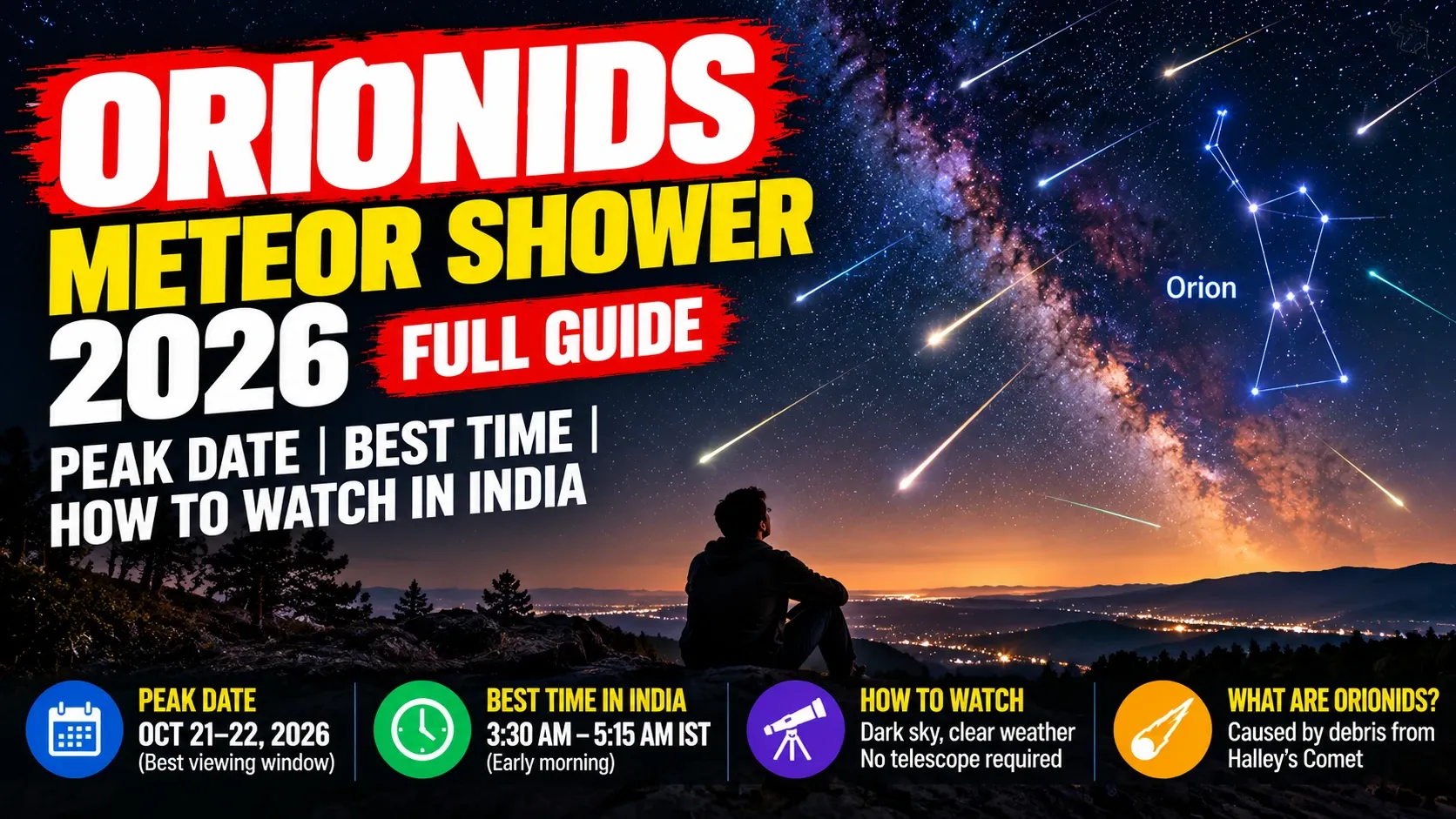
The Orionids meteor shower is an annual astronomical event that attracts skywatchers during October. In 2026, its peak was expected overnight on October 21–22. Actual viewing depends on local weather, light pollution and sky conditions.
What is the Orionids meteor shower?
The Orionids occur when Earth passes through dust and debris left behind by Halley’s Comet. Small particles enter Earth’s atmosphere at high speed and produce bright streaks of light commonly called shooting stars.
The shower is named after the constellation Orion because the meteors appear to originate from a point in that part of the sky. Meteors can appear across a much wider area, so observers should scan the sky rather than focus on a single star.
How to watch a meteor shower
Choose a dark location away from city lights, check the weather forecast, allow your eyes around 20–30 minutes to adjust to darkness, look across a broad section of the sky and avoid bright phone screens while observing.
A telescope is not necessary. The naked eye is generally better for observing meteors across a wide area.
Is the meteor shower dangerous?
The visible streaks are produced by small particles burning up in Earth’s atmosphere. Observing a meteor shower from a safe outdoor location does not require special eye protection, unlike looking at the Sun.
Conclusion
The Orionids offer an opportunity to explore the night sky and learn about comet debris. The 2026 peak has passed or is passing depending on local time, so check an updated astronomical calendar before planning to observe a future shower.