
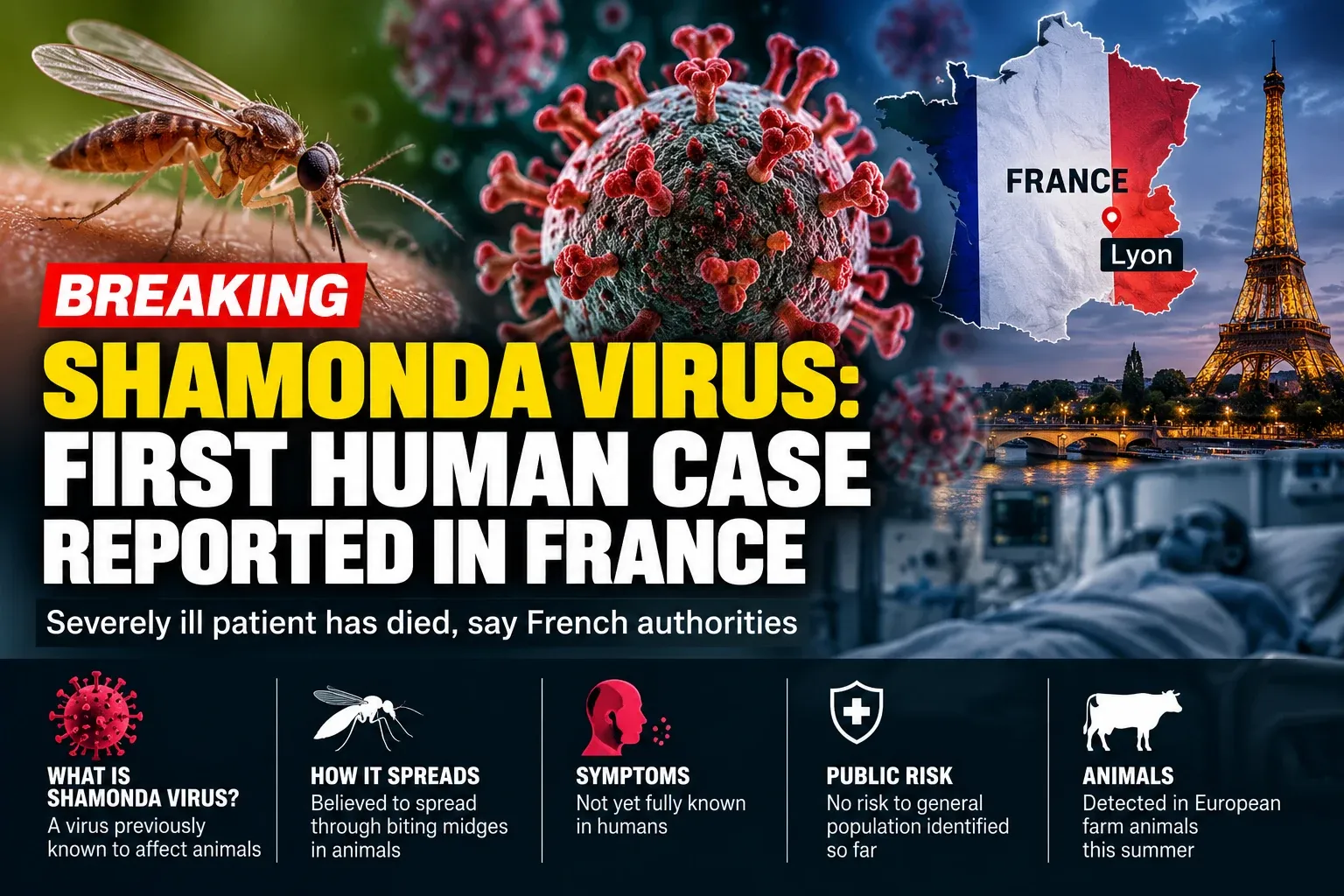
What happened in France?
French authorities have reported the first known human infection with Shamonda virus (SHAV). The patient, who had a serious underlying illness and was severely immunocompromised, died in early October 2026. Investigations are continuing to establish whether the virus caused or contributed to the death and how the infection occurred.
What is Shamonda virus?
Shamonda virus is an orthobunyavirus that was first identified in Nigeria in the 1960s. Before this report, it was known primarily in animals. European animal detections were reported during 2026, prompting public-health and animal-health authorities to investigate the first known human case.
How may it spread?
The leading hypothesis reported by French authorities is that the patient was infected by a biting midge in eastern France, where the virus had circulated among animals. In animals, Shamonda virus is associated with transmission by Culicoides biting midges. The route of infection in this human case remains under investigation, and person-to-person transmission has not been established.
What are the symptoms?
There is not enough human-case evidence to define a reliable symptom profile for Shamonda virus in people. French authorities have said neurological complications were observed in this case, but investigations are ongoing into their relationship to the infection. It would be premature to present a complete list of human symptoms based on a single known case.
Is there a risk to the general public?
Based on current knowledge, French authorities have said they have not identified a risk to the general population. One reported human infection does not by itself show that the virus spreads readily between people or that a wider outbreak is occurring. Health authorities, including the European Centre for Disease Prevention and Control, are monitoring the situation and working with relevant partners.
What should readers know?
The key facts are that this is the first known human infection, the patient was severely immunocompromised and died, and the circumstances of infection and the virus’s possible role in the death are still being investigated. There is currently no confirmed evidence in these reports of a specific risk to people in India.
Sources and editorial note
This article reflects information available on 22 October 2026. Details may change as investigations progress.