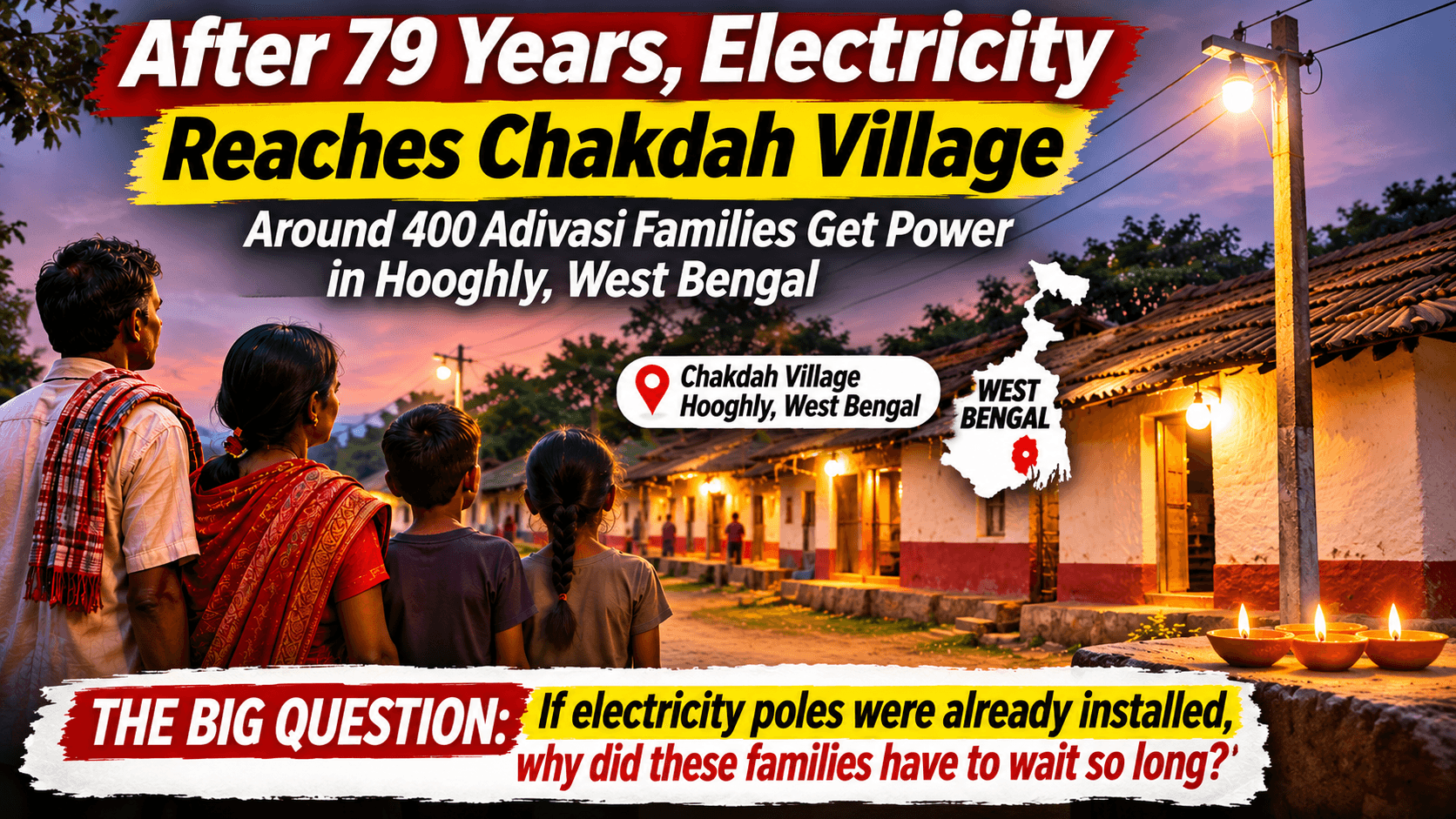
Electricity finally reaches Chakdah village ahead of Diwali
Chakdah village in Hooghly district, West Bengal, has begun receiving electricity connections after residents reportedly lived without regular power for decades. The development has brought relief to families ahead of Diwali.
The village falls under Ashtaradattapur Gram Panchayat in the Tarkeshwar Assembly constituency and is home to around 400 Adivasi families, according to local reports.
Around 400 families, connections being provided in phases
Reports say more than 100 previously unconnected households are being brought under the electricity connection programme, with meters already installed in 50 homes. The reports do not establish that all 400 families have already received electricity.
BJP MLA Santu Pan said eligible families belonging to the Below Poverty Line category would receive connections free of charge. The work is being carried out in phases.
Residents say poles were installed years ago
Residents said electricity poles had been installed in the village years earlier, but wiring and household connections were not completed. The lack of electricity affected everyday activities, including studying after sunset, lighting homes and charging mobile phones.
The development has renewed questions about why the infrastructure remained incomplete for so long and which agencies were responsible for completing the connections.
MLA alleges political discrimination
BJP MLA Santu Pan alleged that residents had consistently voted for the BJP since 1997–98 and claimed that the previous TMC government failed to complete the electricity infrastructure because of the village's political preference. He said he became aware of the issue during his election campaign and promised to address it if elected.
The allegation that electricity was deliberately withheld because of the village's voting preference has not been independently established. A response from the previous administration and relevant electricity authorities would be needed to assess the claim.
A Diwali with new hope
For families who have spent years without regular electricity, the arrival of power represents more than the installation of meters and wires. Reliable connections can improve household lighting, enable children to study after sunset and make everyday activities easier.
The development has brought hope to residents, although the phased connection work means that not every household should be assumed to have received electricity yet.
Why did it take so long?
The development raises an important question about rural infrastructure and the delivery of essential public services. If electricity poles had already been installed years ago, why were the connections not completed earlier? What caused the delay, and which authorities were responsible for resolving it?