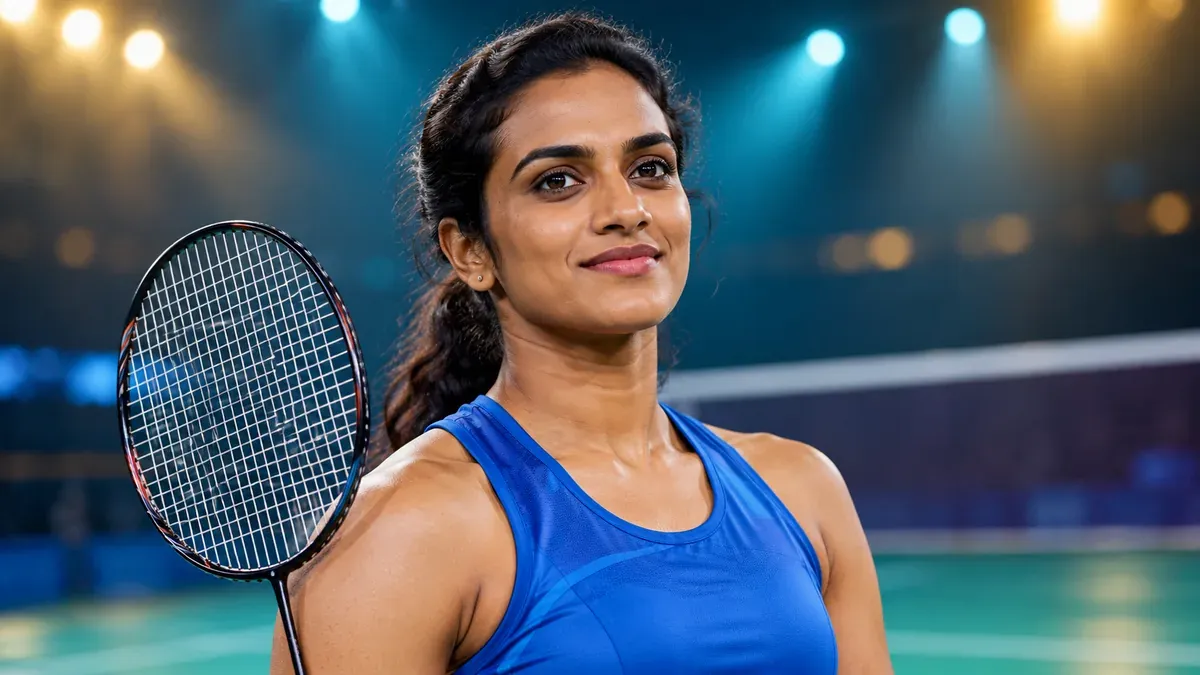
PV Sindhu won the Hylo Open women's singles title in Saarbrücken on November 1, defeating Denmark's Line Kjaersfeldt 21–12, 21–14. The result gave the Indian shuttler another tournament victory in a season that had already included success at the Japan Open.
Sindhu's title formed part of a successful finals day for India, with Lakshya Sen also winning the men's singles event. The two results were separate individual achievements at the same tournament, rather than a team championship.
A final completed without a deciding game
The scoreline shows Sindhu winning both games with room to spare. Kjaersfeldt reached 12 points in the opener and 14 in the second, leaving the Indian to finish the contest without the additional demands of a third game.
Akashvani's report described Sindhu as reaching a second BWF tournament final in successive weeks. That sequence gives the German result additional significance: she was able to follow one deep tournament run with another and finish the second with the trophy.
The Hylo Open was held at the Saarlandhalle in Saarbrücken, with the finals on November 1. It is part of the international tour, where players compete through successive rounds rather than qualifying for a final from a group table.
Control beyond the power game
The Indian Express's match account emphasised Sindhu's variety, describing her use of the net, placement and defensive responses alongside the attacking power for which she is known. Her reported comments after the final credited her team and stressed the importance of concentration from point to point.
That offers a useful way to read the result. A straight-games victory does not necessarily mean every rally was simple. The ability to keep control when an opponent briefly dictates an exchange can matter as much as a run of obvious winners.
The distinction is particularly relevant in badminton because each new rally starts with the same opportunity to win a point. An early lead provides an advantage, but it does not remove the need to make good decisions until the game is completed.
Why converting a final matters
Reaching the closing stages of a tournament and winning it are related but different tests. A finalist has already demonstrated consistency across the draw; the final asks for another performance against an opponent who has survived the same elimination process.
Sindhu supplied that final performance in Germany. The result gives her a completed title run to carry forward, rather than another campaign ending one match short. It is a concrete achievement without needing predictions about how she will perform at the next event.