The DMK has demanded the withdrawal of the Special Intensive Revision of electoral rolls, the removal of Chief Election Commissioner Gyanesh Kumar and a return to paper-ballot voting. The positions were adopted at a meeting of the party’s Members of Parliament chaired by MK Stalin in Chennai on October 17.
UNI reported that the meeting passed four resolutions and decided that DMK MPs would submit a memorandum to President Droupadi Murmu. The planned representation is intended to press the party’s demands on the electoral-roll exercise and the voting system. It is a proposed political intervention, not a change already made to election procedures.
What the resolutions seek
The party alleged that eligible voters had been removed during the revision process and called for scrutiny of the Chief Election Commissioner’s role. It also expressed support for youth and student movements campaigning on the issue. These are the DMK’s allegations and demands; the resolutions do not themselves establish that individual deletions were unlawful.
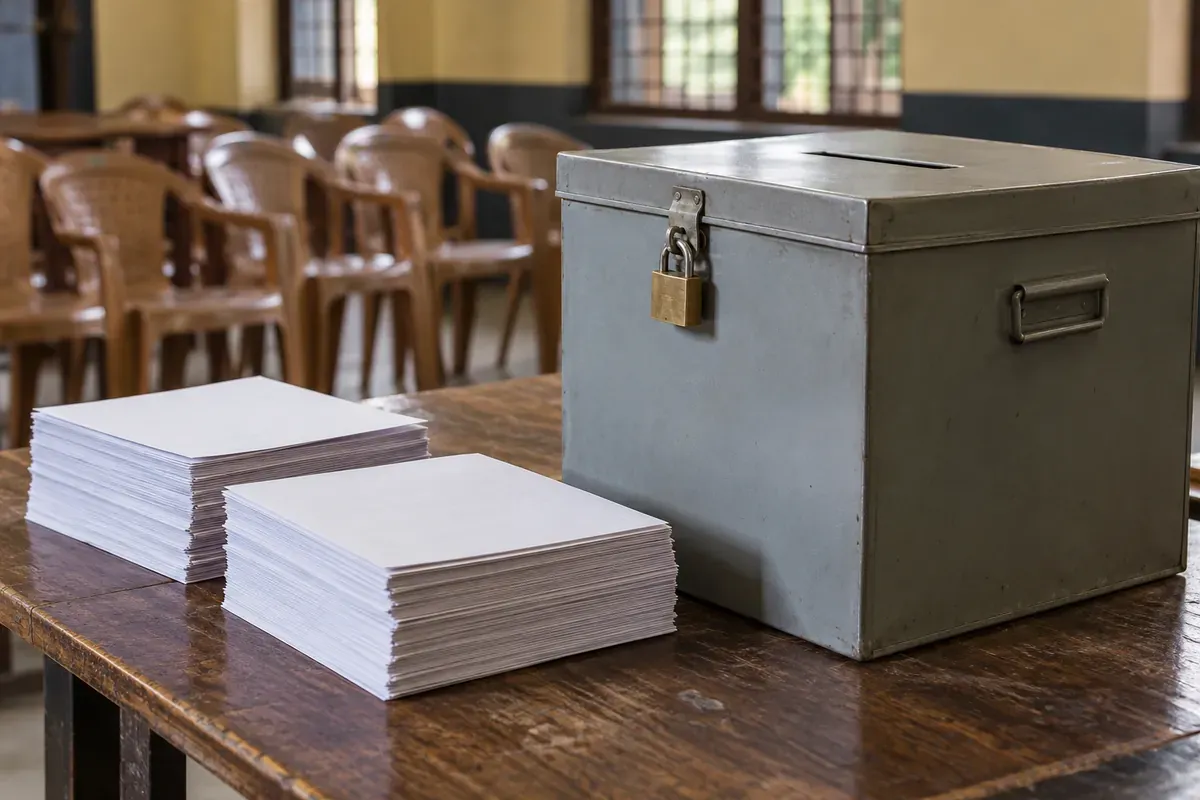
DT Next reported that the party wanted elections conducted using rolls prepared before the revision. Its account said the resolutions argued that corrections should protect people’s voting rights, rather than deprive them of those rights. The demand for paper ballots was presented by the party as a way to restore confidence in election outcomes.
Electoral rolls and the method of recording votes are different parts of the election process. The first concerns who is registered; the second concerns how an eligible voter casts a ballot. By combining the two demands, the DMK is broadening its campaign beyond objections to particular entries on the voter list.
Support for protests, distance from Congress
NDTV reported that the DMK backed protests associated with the CJP and other student movements while maintaining its distance from the Congress. The party’s resolution criticised Congress and Tamil Nadu’s ruling TVK over what it characterised as inconsistent positions on SIR. Those criticisms are political claims by the DMK, rather than an independent assessment of the parties’ conduct.
The report also described discussions about a possible wider grouping involving regional leaders. Such exploratory contacts should not be reported as a completed alliance. The concrete development on October 17 is the parliamentary party’s adoption of resolutions and its stated plan to approach the President.
The distinction matters because a resolution, a public expression of support and a formal electoral arrangement carry different implications. The meeting signals the issues on which the DMK intends to campaign. It does not, on its own, settle which parties or organisations would eventually coordinate an election strategy.
What electoral-roll procedures normally provide
The Election Commission’s published registration guidance sets out separate routes for adding, correcting and objecting to entries. Form 6 is used for new voter registration, Form 7 for deletion requests or objections, and Form 8 for changes such as correcting particulars or shifting residence. These are distinct applications, rather than interchangeable ways to address every roll-related problem.
The Commission’s electoral-roll manual describes claims and objections after publication of a draft roll. Applications may be submitted to the Electoral Registration Officer through the prescribed channels. This procedural background helps explain why the handling of inclusion, deletion and correction requests is central to disputes about a revision exercise.
The existence of these procedures does not prove that every disputed case has been handled correctly. Equally, a party allegation does not resolve the facts of every individual entry. Assessing a specific complaint requires the relevant application, notice, decision and supporting records, rather than conclusions drawn solely from a political statement.
What happens next
The next identifiable step announced by the DMK is its memorandum to the President. Its contents, the response from the authorities and any subsequent parliamentary action will show how the demands move beyond the party meeting. The reporting reviewed does not establish that the memorandum has already produced an official decision.
For voters, the practical issue remains their own registration status and the official process for resolving an error. The Election Commission provides registration guidance and an electoral-search service through its website. Individual application requirements and deadlines should be checked against the relevant official notice, rather than inferred from a national political dispute.
The October 17 resolutions mark a sharper public position by the DMK on SIR, election administration and paper ballots. They also place the party alongside protesting students while preserving its criticism of other political formations. Whether that position leads to a broader arrangement remains separate from the demands formally adopted at the MPs’ meeting.