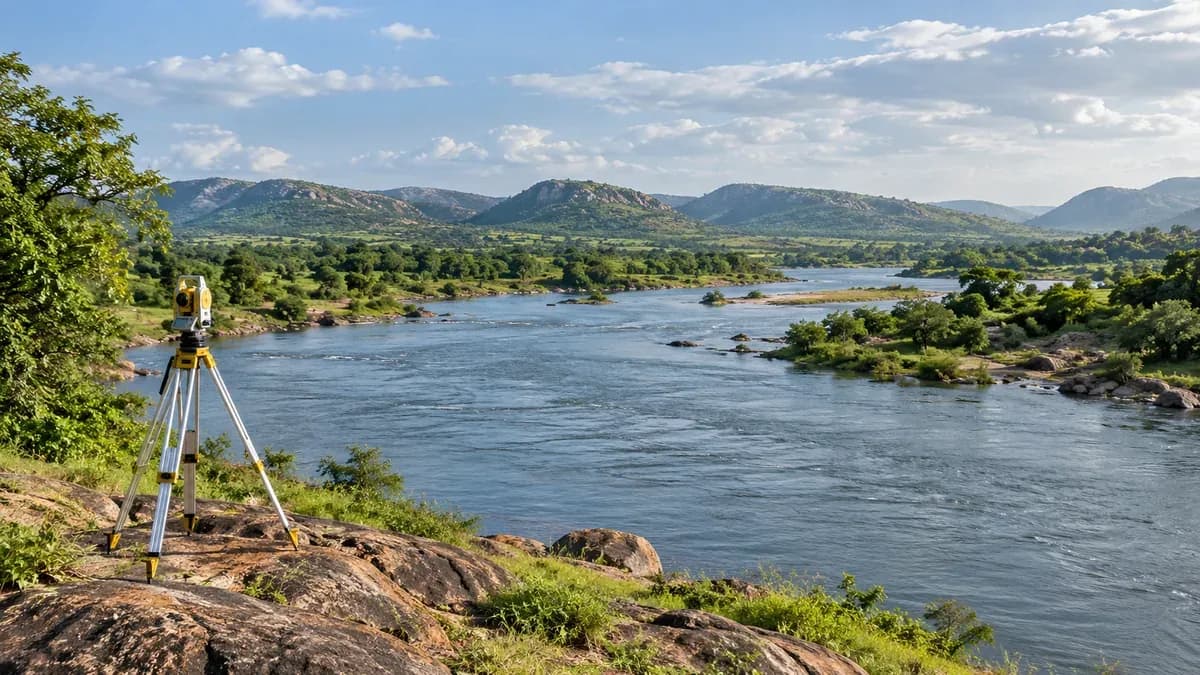
Telangana Chief Minister A Revanth Reddy’s planned talks with Maharashtra Chief Minister Devendra Fadnavis have brought the long-pending Tummidihatti barrage proposal back into focus. The meeting was scheduled in Mumbai on October 26, with the height of the proposed structure and its implications for both states among the central questions.
Revanth Reddy left Hyderabad on October 25. Irrigation Minister N Uttam Kumar Reddy and senior irrigation officials were expected to join the discussions. At the time of this report, the available accounts described the meeting’s agenda; they did not establish that Maharashtra had accepted a revised height or that construction had been cleared.
Why the height matters
Telangana is seeking consent for a higher level than the 148 metres covered by an interstate agreement signed in August 2016. Reports of its current position refer to a level between 150 and 152 metres.
The state’s argument is that the higher level would help move the required quantity of water through gravity, reducing dependence on pumping and the electricity associated with it. That is the rationale advanced by the Telangana government, rather than a guarantee of the project’s eventual operating costs.
Changing the level of a barrage also raises questions beyond water delivery. The discussions must address the area affected by backed-up water, land requirements and the consequences on the Maharashtra side. A difference of a few metres can therefore be central to an interstate negotiation, even when both governments are discussing the same river project.
A proposal with a long history
Tummidihatti was conceived as part of the Dr BR Ambedkar Pranahita-Chevella project during the tenure of YS Rajasekhara Reddy in undivided Andhra Pradesh. Its development subsequently stalled. The later Telangana government shifted its focus to Medigadda as part of the Kaleshwaram Lift Irrigation Scheme.
The present Telangana administration argues that reviving Tummidihatti could help meet irrigation and drinking-water needs in areas including the erstwhile Adilabad district. Those proposed benefits remain part of the case for the project; they should not be confused with water already reaching farms through a completed barrage.
According to reporting on the proposal, water would be diverted towards Sundilla and then moved to Yellampalli using an existing lifting system. This is an important qualification to broad descriptions of a gravity-based project: reducing pumping on one part of a route does not mean that every stage would operate without lifts.