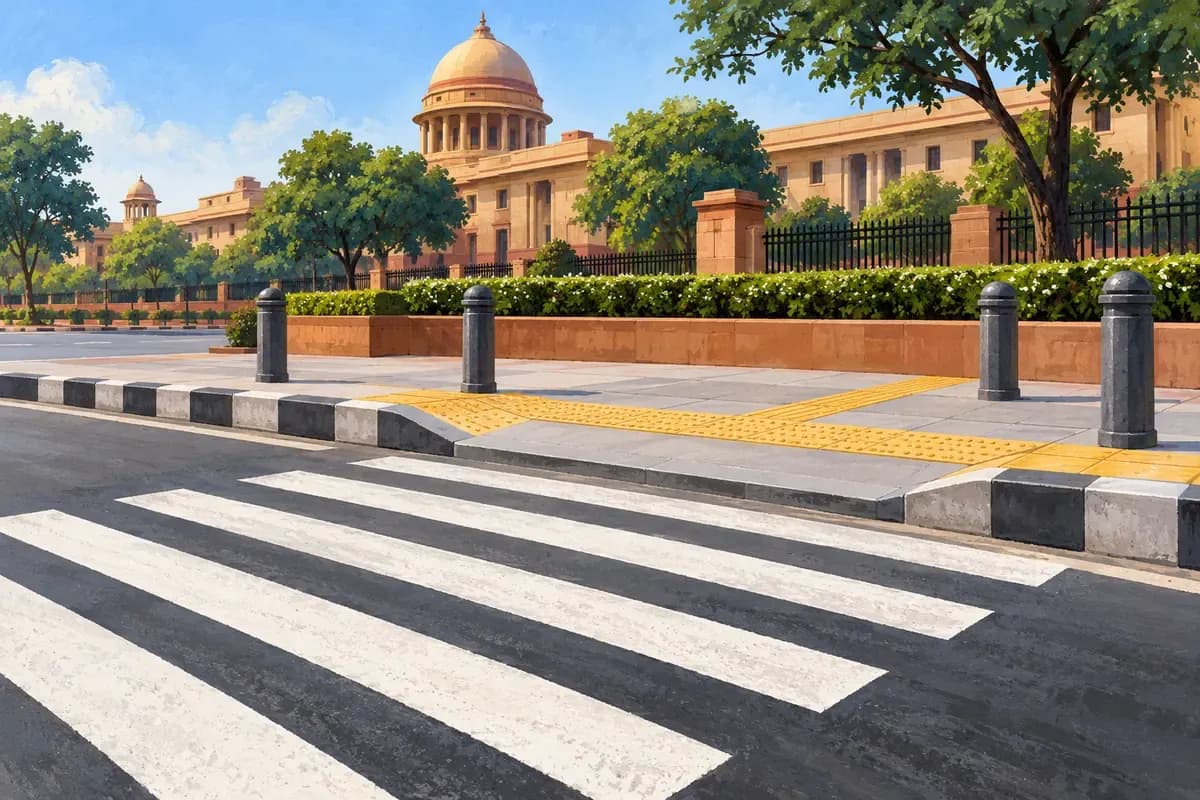
The Supreme Court has pressed the authorities to take concrete steps on pedestrian safety near the Delhi High Court and the National Zoological Park on Mathura Road before the next hearing on November 25. The October 16 proceedings focused on delays in providing a safer crossing on a busy stretch used by court visitors and the public.
A bench of Justices JB Pardiwala and KV Viswanathan expressed frustration with the pace of action. In an oral remark reported by legal correspondents, the judges said they could sit outside the High Court in protest if the issue remained unresolved. The comment conveyed dissatisfaction; it was not an announcement of an actual scheduled demonstration.
A crossing used by many groups
The stretch connects destinations that attract different kinds of pedestrians, including lawyers, litigants, families and children visiting the zoo. The court's concern was that the arrangements did not adequately address the risks faced by people trying to cross the road amid traffic.
The New Indian Express reported that the bench questioned why a basic traffic-safety problem had remained unresolved. Additional Solicitor General Vikramjit Banerjee referred to a committee considering the matter. The exchange highlighted the court's expectation of a physical result, rather than another explanation of an ongoing administrative process.
The November 25 date provides a point at which progress can be reviewed. It should not be confused with confirmation that construction has already begun or that a specific design has been approved. Those are implementation details that require evidence from the agencies responsible for the work.
Earlier hearings explain the frustration
LiveLaw's account traced the matter to previous discussions in September and October. On September 15, the court was told that a red light had been installed. The bench nevertheless raised the need for additional measures, including speed breakers and rumble strips, around the crossing.
On October 5, the court again directed attention to the pedestrian crossing near the High Court and the zoo. The October 16 observations therefore followed earlier consideration of the same location. The frustration was about the gap between repeated discussion and a satisfactory arrangement on the ground.
This chronology matters because a report focused only on the judges' protest remark can obscure the underlying issue. The proceedings concern how people cross a road safely, which agencies must act and whether the steps taken actually address the danger identified during the hearings.
What an implementation update should show
The most useful follow-up would identify the approved crossing arrangement, the authority responsible for delivering it and the status of work. It would also clarify how the crossing connects to the pedestrian route on either side. A crossing cannot be assessed solely from the existence of a signal mentioned in an earlier hearing.
Questions about timing and usability are central to this case. A person approaching the High Court may be carrying documents or accompanying an older litigant; a family approaching the zoo may include children. These examples illustrate why a road-safety arrangement has to work for people on foot, rather than merely appear in a departmental plan.
The court's discussion of traffic-calming measures does not establish that every suggested measure will be installed. Engineering and administrative decisions still need to be distinguished from oral observations. Reporting an approved design requires the actual plan or an authoritative update, rather than an inference from a courtroom exchange.
Accountability at the next hearing
The bench's remarks put a clear focus on progress by November 25. The next hearing can establish whether the authorities have delivered the requested improvement and whether further directions are necessary. At this stage, the available reports do not confirm completion.
The case also demonstrates why small pieces of public infrastructure can become significant access issues. The High Court is a place people must reach to conduct legal business, while the adjoining public destination attracts families. The safety problem is therefore about ordinary access to institutions as much as traffic flow.
The current development is renewed judicial pressure for a workable pedestrian crossing. The headline-making oral comment should be read in that context, while the practical test remains whether people using the Mathura Road stretch receive a safer route before the court reviews the matter again.