The 37th Loktak Day celebrations began in Manipur on October 25, bringing together participants from hill and valley communities around a shared concern: protecting the lake and the life connected to it. The two-day observance opened at Loktak Lairembi Ground, with the Loktak Development Authority and the Loktak Day Celebration Committee, Thanga, organising the programme.
The event combines a public celebration with an environmental message. Local reporting described a bike rally from Kangla and visits by community representatives, alongside calls for stronger participation in conservation. It does not establish that a new restoration project was completed or that the lake’s existing environmental problems have been resolved.
A gathering around the lake
Chief Minister Yumnam Khemchand Singh flagged off the rally, which travelled to Loktak. Representatives from the hill areas were also visiting as part of activities surrounding Mera Hou Chongba, the cultural observance associated with ties between Manipur’s communities.
Reports described gift exchanges and a shared meal near the lake. These were specific gestures of participation at an event, rather than evidence that every wider social or political disagreement had been overcome. Their significance lies in bringing people together around a place with environmental, cultural and livelihood value.
Speakers urged younger people to take an interest in preservation. Coverage by local broadcaster Impact TV emphasised that admiration for Loktak’s beauty needs to be accompanied by practical efforts to protect it. The public appeal gives this year’s celebration a purpose beyond a ceremonial gathering.
Why Loktak matters
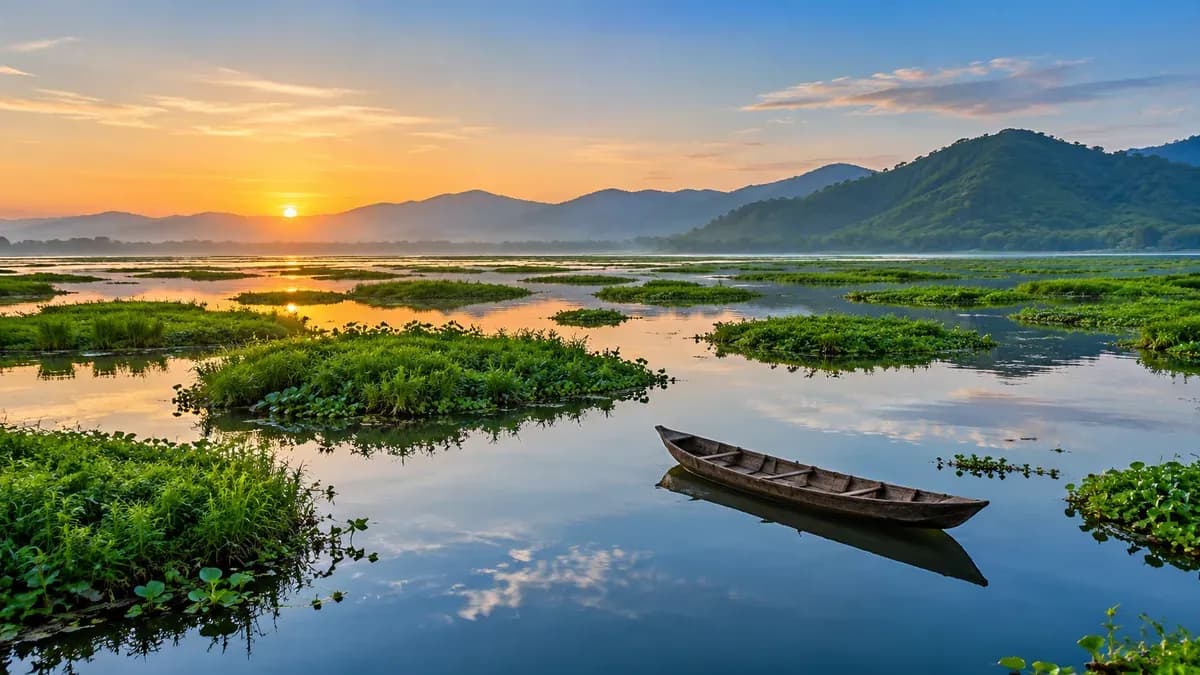
Loktak is recognised as a wetland of international importance under the Ramsar framework. Its characteristic floating masses of vegetation, soil and organic matter, commonly called phumdis, make it a distinctive ecosystem. The lake is also connected to the livelihoods and cultural life of surrounding communities.
The Indian government’s Ramsar information describes a wetland fed by streams draining its catchment. That relationship is important: what happens upstream and around the shoreline can affect the water body itself. Protection cannot be reduced to looking after the most visible parts of the lake used by visitors.
Official and conservation material identifies pressures associated with water management, vegetation and the condition of the catchment. These are longstanding management issues, not new damage measurements announced during Sunday’s celebration. Historical background should help explain the conservation appeal without being presented as a fresh survey.