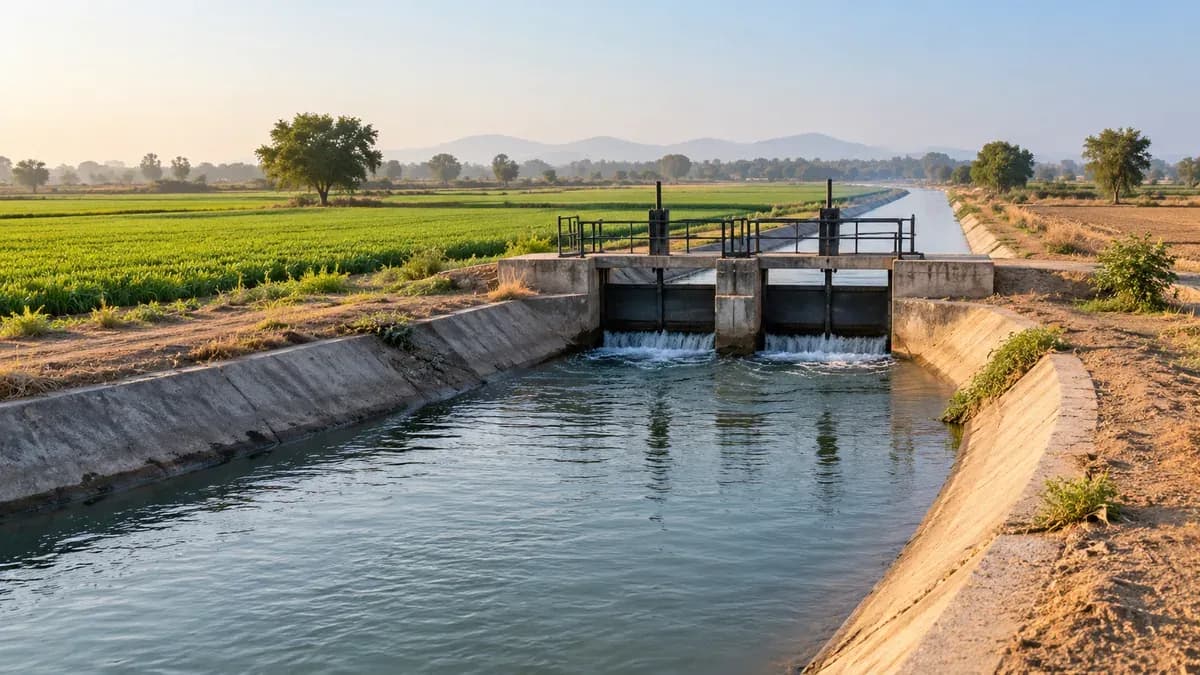
Gujarat has proposed offering electricity or financial compensation in return for additional water, Union Jal Shakti Minister C R Patil said on October 25. The proposal is aimed at meeting the state’s needs ahead of the Rabi cropping season after a monsoon that left some areas substantially short of rain.
Patil said Chief Minister Bhupendra Patel was expected to discuss water requirements with his counterparts from Madhya Pradesh, Maharashtra and Rajasthan in Delhi, possibly on Tuesday. His statement describes a proposed negotiation, not a completed supply agreement or a confirmed release of additional water.
What Gujarat is seeking
The minister outlined the proposal at a public event in Surat. Gujarat, he said, was prepared to return electricity generated from the water or provide payment in exchange for supplies. The details of any quantity, price, release schedule or operating conditions were not established in the announcement.
That distinction is important for farmers planning the next crop. A willingness to negotiate may help advance a request, but it does not tell a particular irrigation command when water will arrive. Local irrigation schedules would need to follow separately from any interstate understanding.
Patil attributed the shortage to El Niño. That is the minister’s explanation; the announcement is not itself a scientific assessment of the causes of rainfall variation in each district. A climate attribution requires evidence beyond a political statement about the water situation.
Uneven rainfall adds pressure
The Indian Express, citing the State Emergency Operations Centre, reported that Gujarat had received 810.68 millimetres of rain by October 25, equivalent to 89.19 per cent of its average monsoon rainfall. A statewide total can nevertheless hide much sharper shortages in particular areas.
Recent reporting has highlighted uneven rainfall in parts of Saurashtra, Kutch and north Gujarat. Those regional differences matter because reservoirs, local water sources and agricultural requirements do not respond uniformly to a state average. A relatively better total in one area cannot be assumed to solve a shortage elsewhere.
The immediate question for the negotiations is how much additional supply can be arranged and under what conditions. It is not yet possible to translate the minister’s proposal into a guaranteed benefit for every farm or town.
Why four states are involved
The Narmada’s development and water-sharing arrangements involve Madhya Pradesh, Gujarat, Maharashtra and Rajasthan. The 1979 tribunal award established an allocation framework among the four states, alongside provisions governing regulated releases and other aspects of the system.
The award’s historical allocation was based on 28 million acre-feet of utilisable water, with 18.25 million acre-feet for Madhya Pradesh, nine for Gujarat, 0.5 for Rajasthan and 0.25 for Maharashtra. These are the framework’s allocation figures, not a report of the volume currently stored or newly promised for this season.
Water-sharing and cost-sharing are also different issues. In July, the Union government announced an agreement addressing pending payment matters among the Narmada beneficiary states connected with Sardar Sarovar. That earlier agreement should not be mistaken for approval of the new seasonal request outlined by Patil.
What an agreement would need to clarify
Any outcome from the proposed talks should identify the amount of water involved, the timing and the commitments made by each participating government. Without those details, a headline announcing that Gujarat has “bought water” would be premature.
For now, the proposal signals the urgency of securing supplies before the Rabi season advances. The next meaningful update will be an official account of the discussions and any agreed release arrangements, followed by information on how those supplies would be distributed within the state.
Frequently asked questions
Key questions and answers at a glance.
Has Gujarat finalised a water purchase?
No completed agreement is established by the announcement. The minister described an offer and expected discussions with partner states.
Which states are involved?
Gujarat, Madhya Pradesh, Maharashtra and Rajasthan are the four states associated with the Narmada sharing framework and the proposed talks.
Does the announcement guarantee irrigation water immediately?
No. A supply agreement, release schedule and local distribution instructions would need to be confirmed separately.